Lecture 02
E21 Computer Engineering Fundamentals
September 3, 2026
Materials you should have
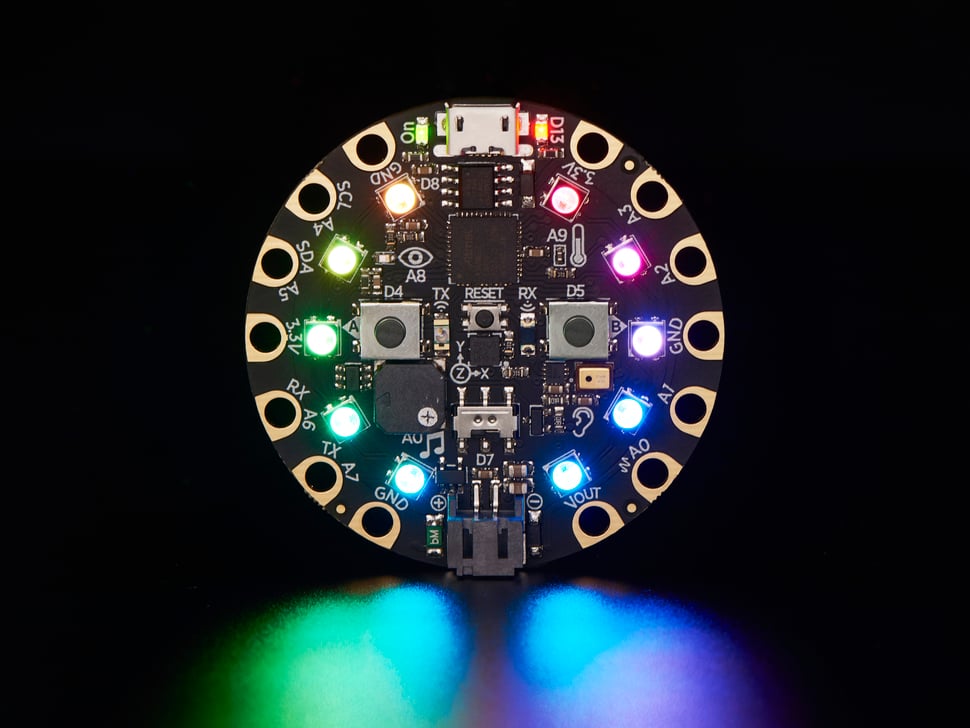
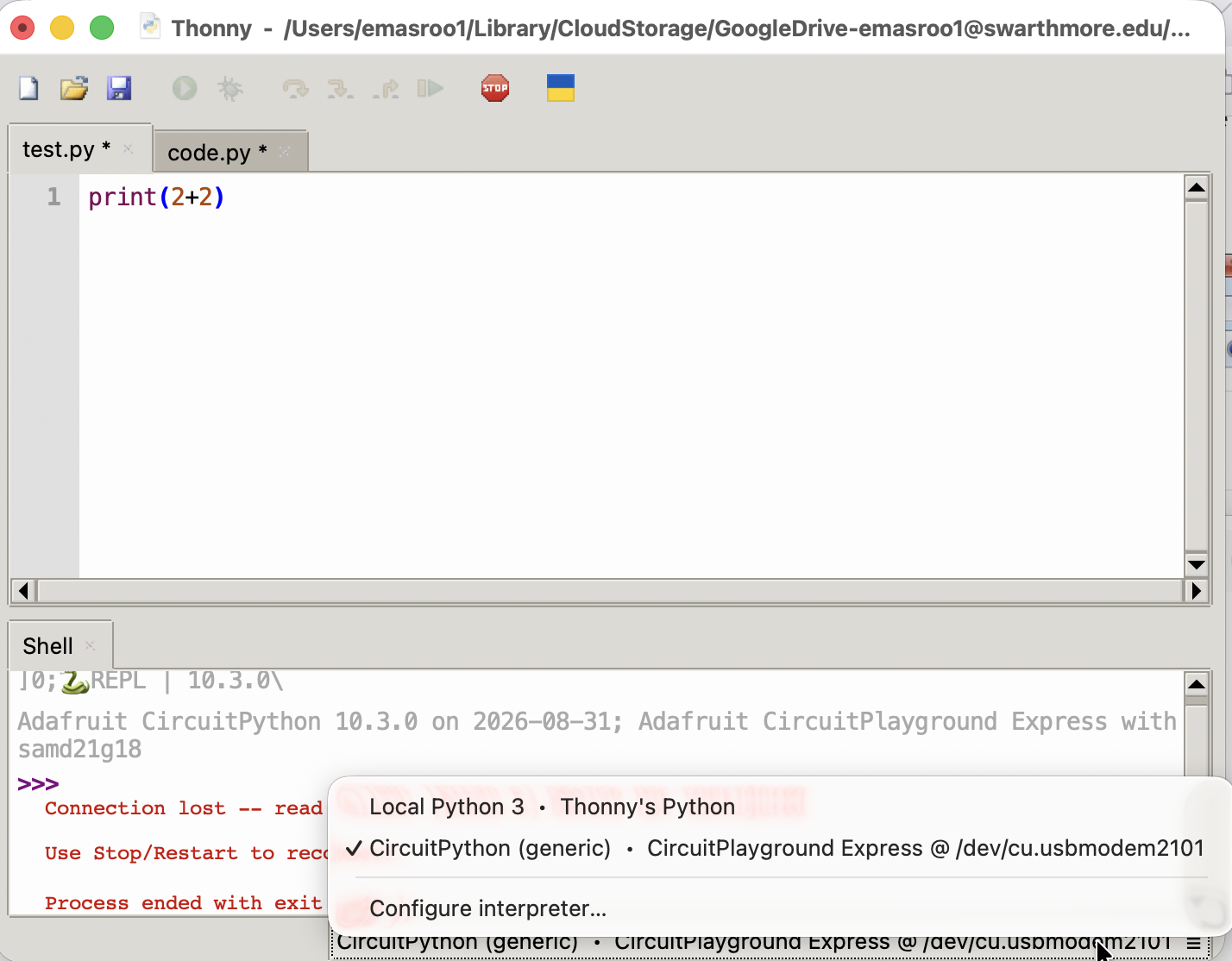
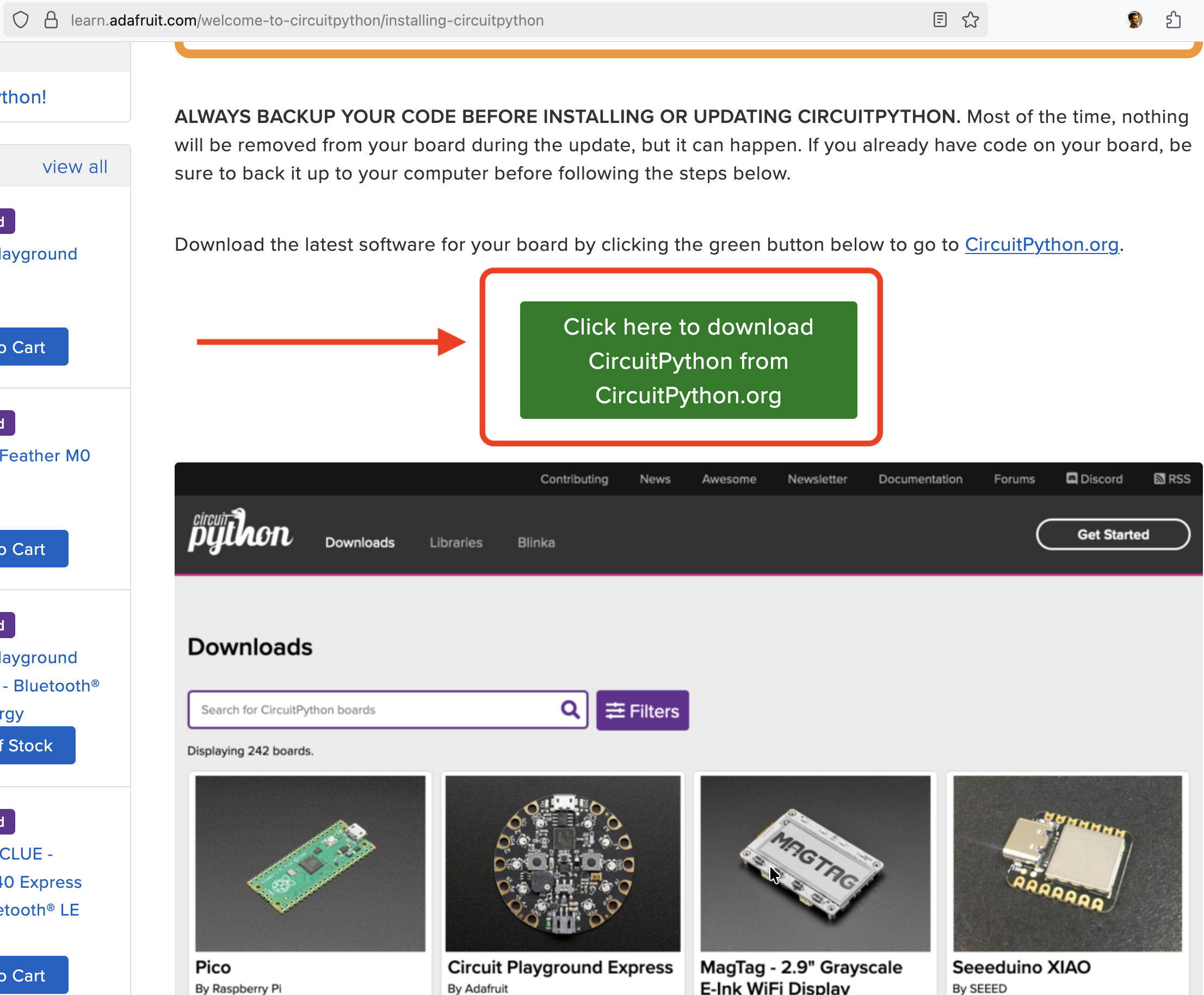
* Drag-and-drop UF2 file onto CPLAYBOOT drive; if you see CIRCUITPY as an external drive, you have succeeded. Find instructions on Lecture 1 page.
Also:

Two ways to run code on your board
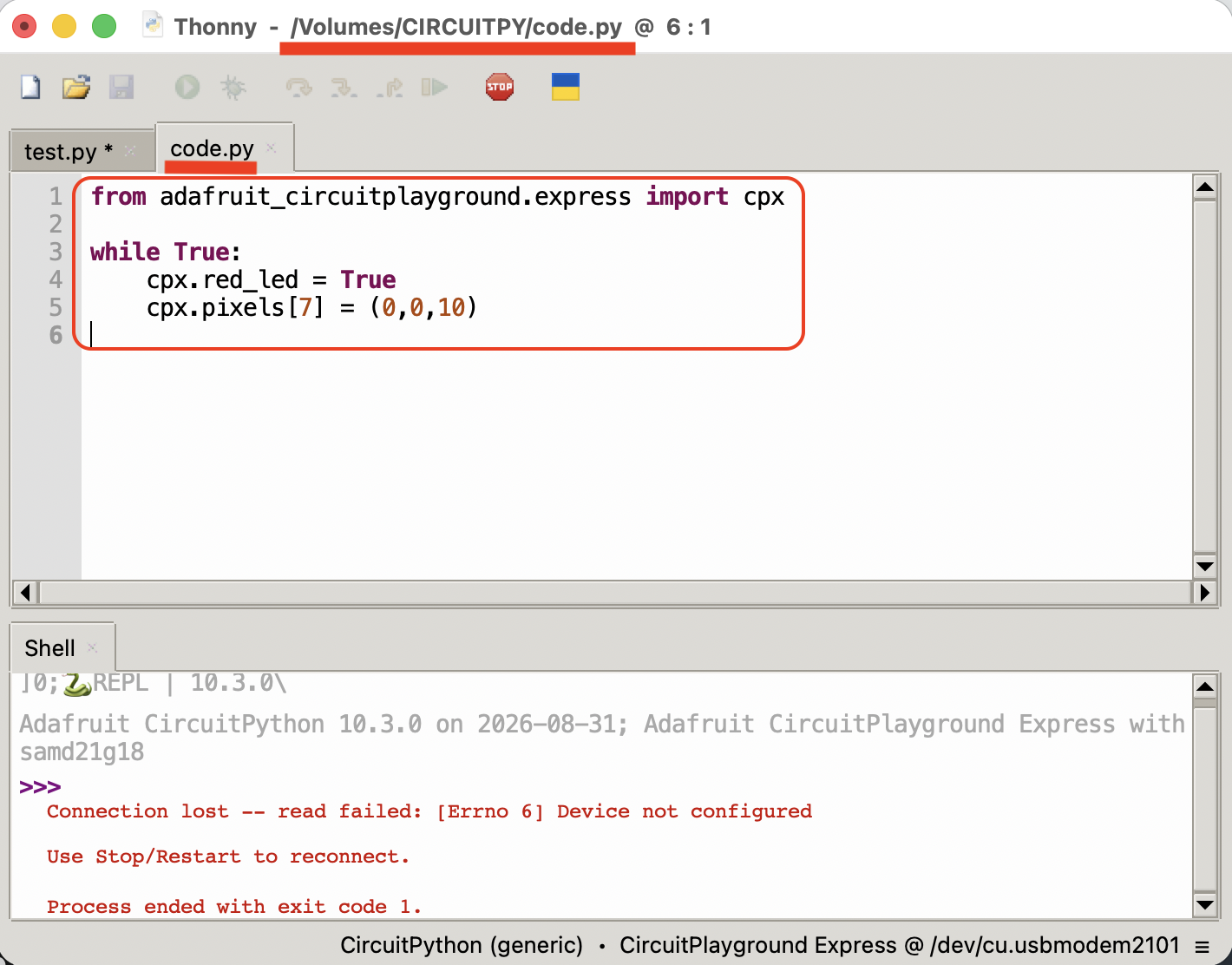
code.py on board the file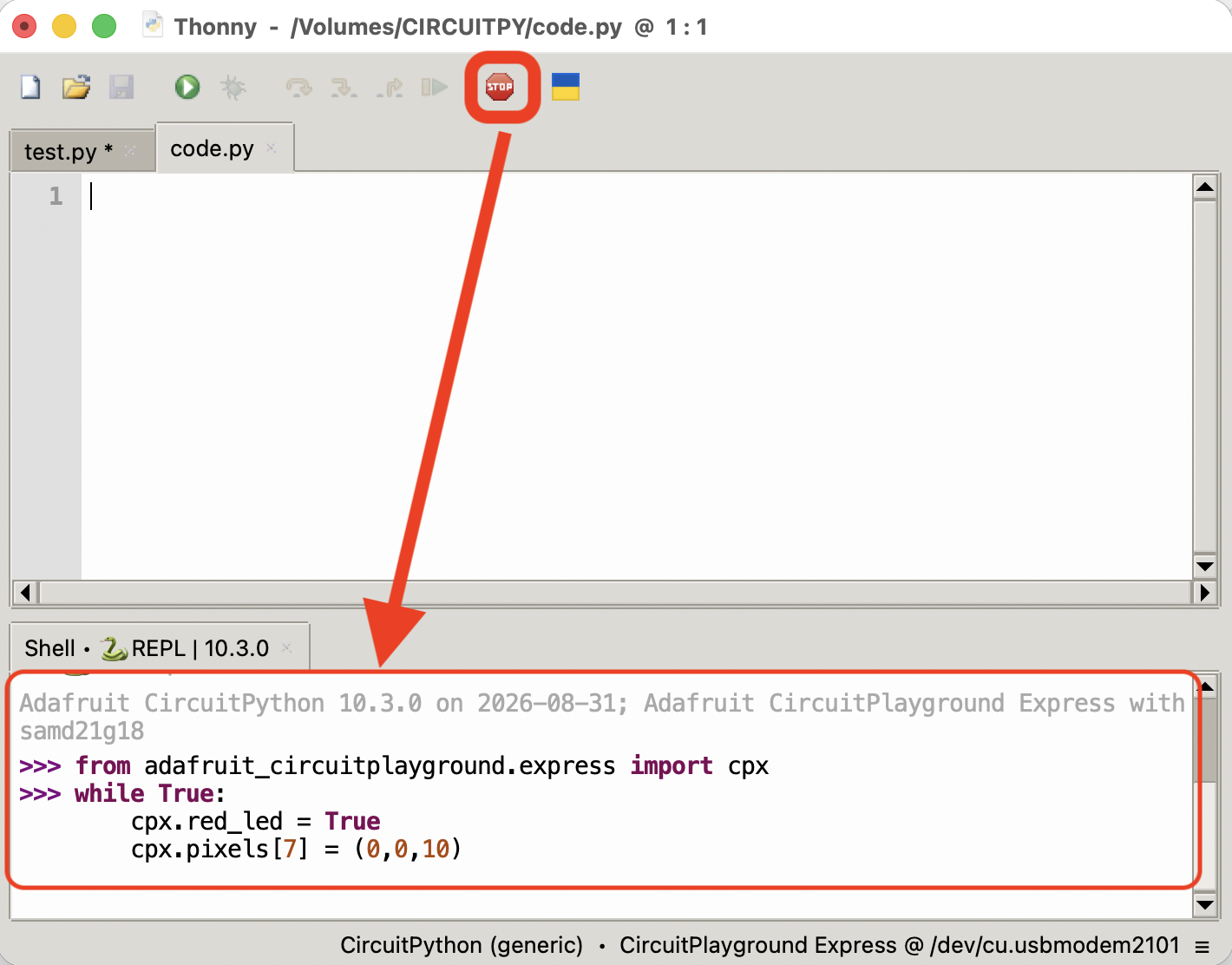
- Once you’re sure what you want to code
- Thoughtful, long-form coding
- Runs if and when you save
code.py - Persistent
- Trying things out
- Instant feedback if works
- Runs when you hit enter
- No memory
Let’s start with the CPX in interactive mode
- Disconnect and reconnect CPX.
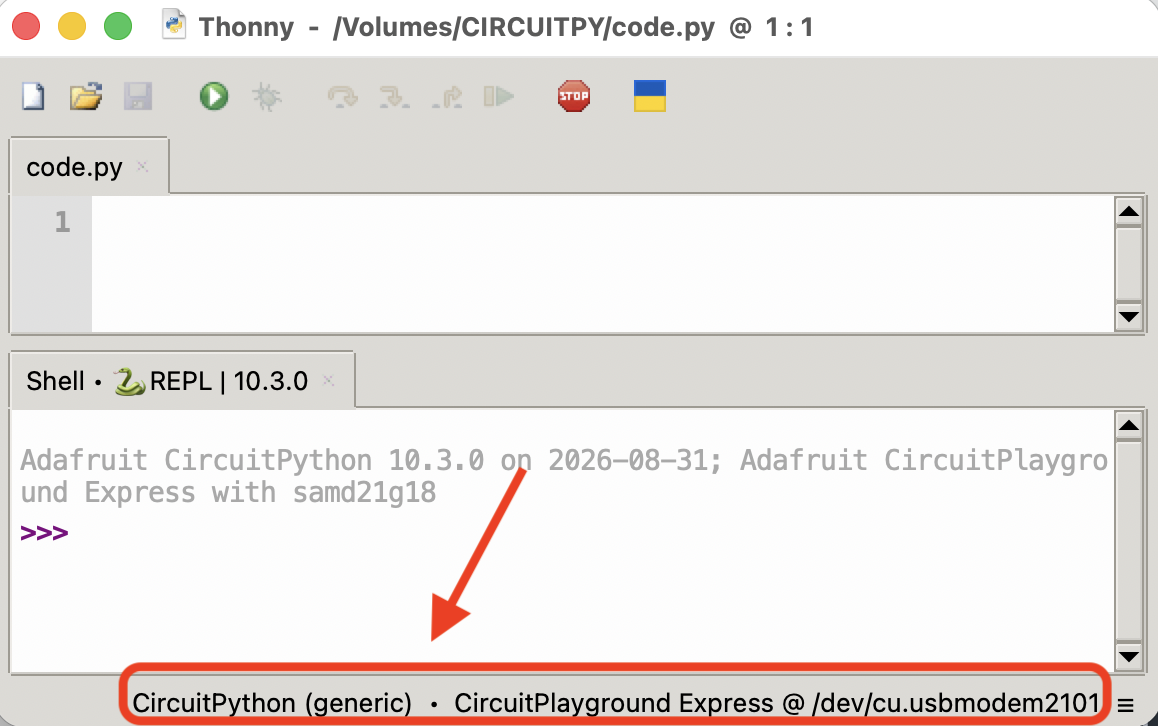
- Open Thonny Code Editor. You should see “CircuitPython (generic)” here.
- Click
![]() . You should now see white lights
. You should now see white lights ![]()
 . You should now see white lights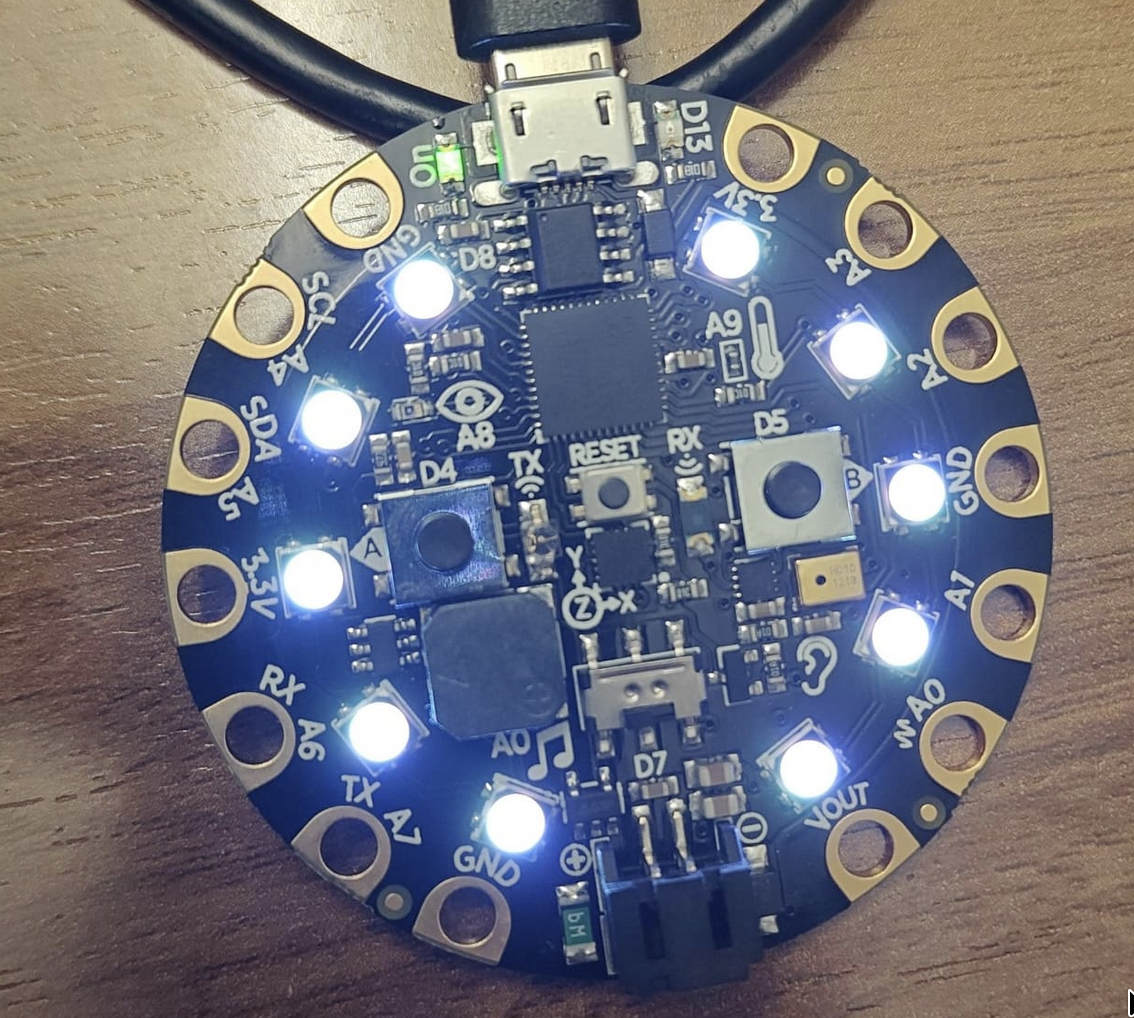
Using your Circuit Playground Express
The CPX can do some things without loading any libraries. e.g., try:
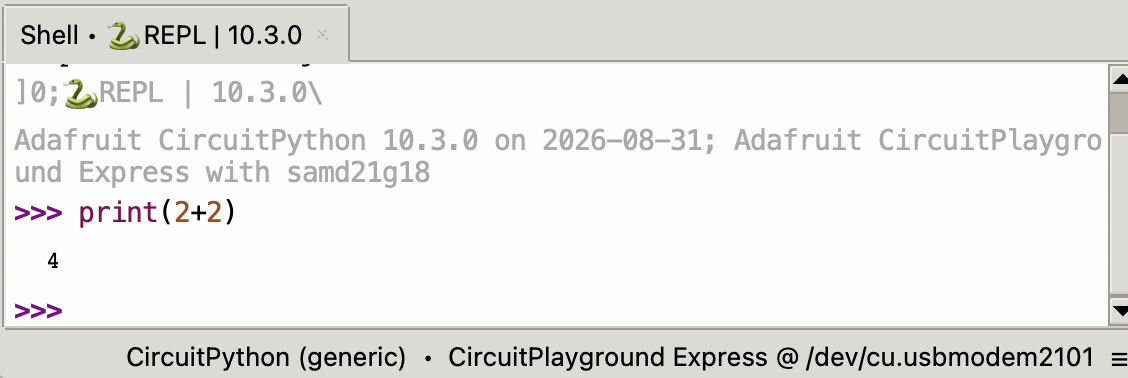
This uses the computer on board the CPX to calculate 2+2.
Python features
Unlike MATLAB, semicolons are irrelevant. Don’t use them!
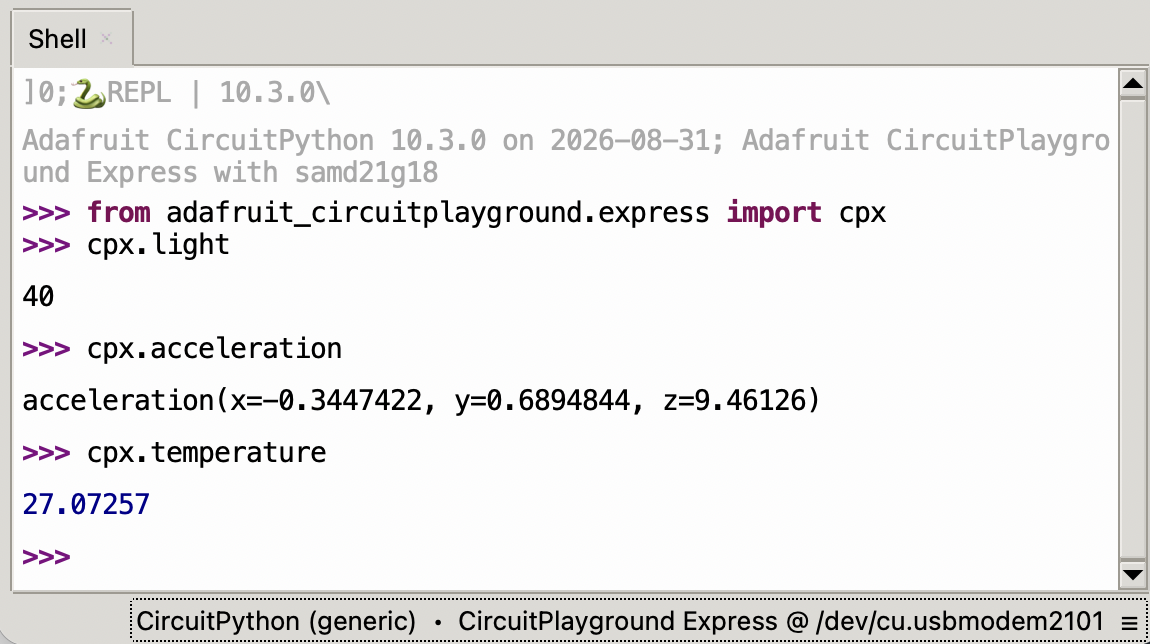
Reading Sensors on the CPX
- Light Sensor:
cpx.light - Acceleration:
cpx.acceleration - Temperature:
cpx.temperature - Touch sensors:
cpx.touch_A4,cpx.touch_A3etc.
Conditionals
A conditional is a statement that evaluates to True or False.
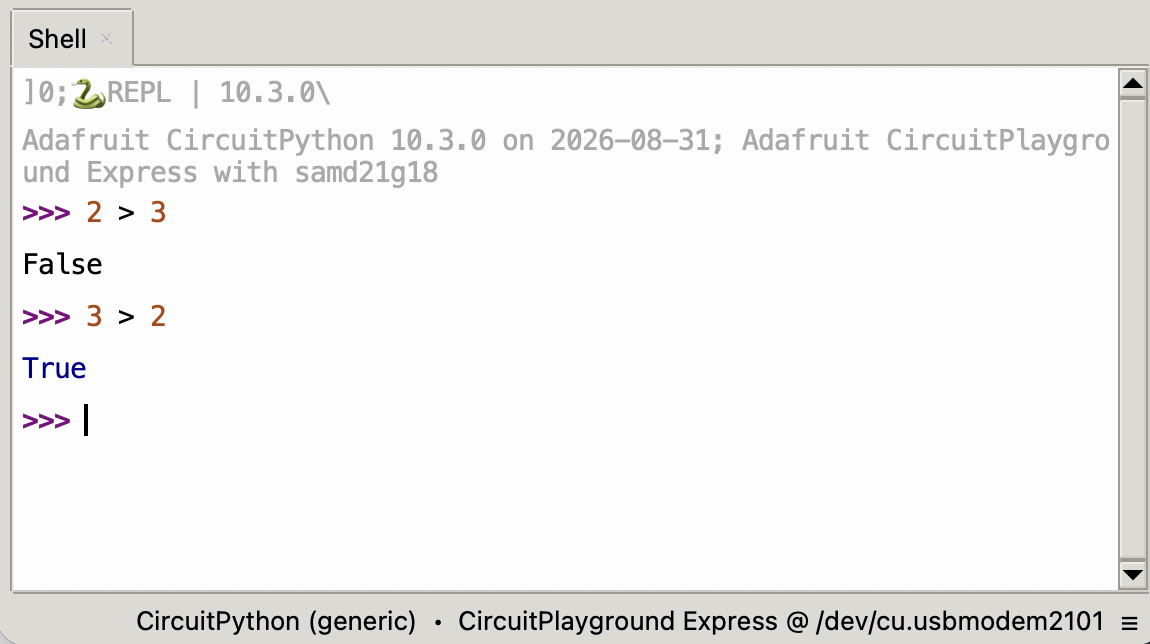
Conditional operators — comparing two numbers
>: Greater than<: Less than==: Equal to!=: Not equal to>=: Greater than or equal to<=: Less than or equal to
Trying out conditional operators on CPX
Try the following code:
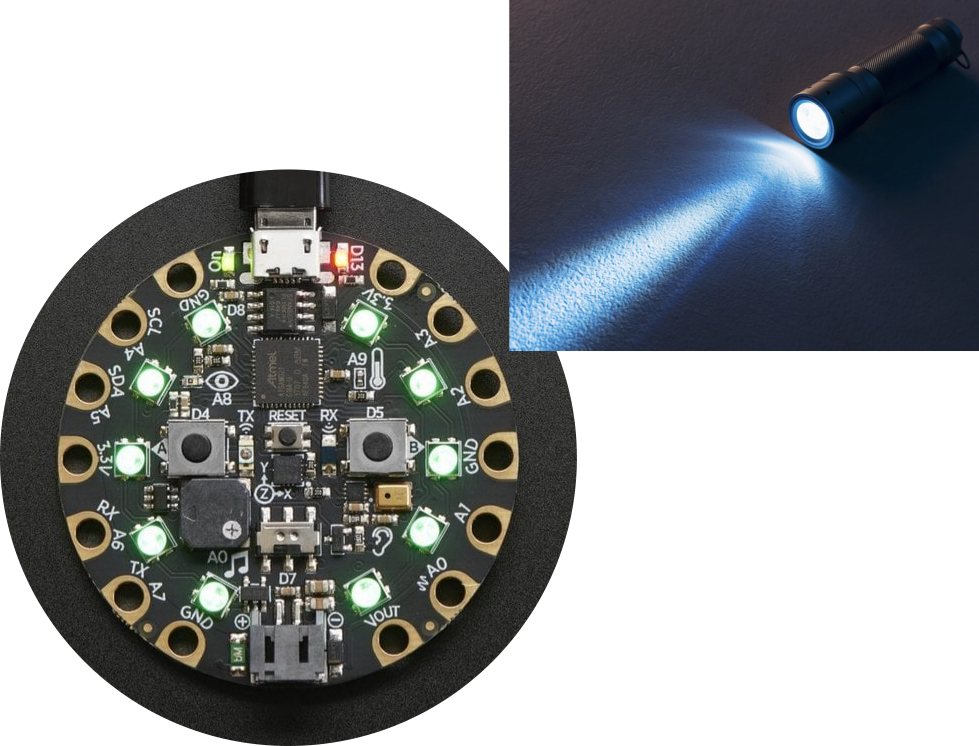
cpx.light > 100
Next, try this with a cell phone flashlight shining on the CPX.
Common variable types in Python
| Type | Name | Purpose |
|---|---|---|
| String | str |
String of text |
| Integer | int |
Whole numbers |
| Floating-point numbers | float |
Decimals |
| Boolean | bool |
Truth value |
| List | list |
Ordered list of variables |
| Tuple | tuple |
Un-alterable list |
| Range | range |
A sequence of numbers |
Check the type of a variable x using type(x)
Python features
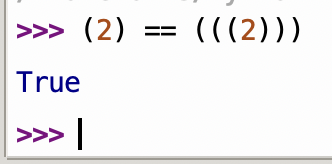
Parantheses around a single variable don’t do anything.
The range type
Refers to a range of whole numbers.
You can access different elements of a range the same way you would access elements of a list.
Your computer saves memory if you use range instead of list.
>>> a = [1,3,5,7,9,11,13]
>>> b = range(1,13,2)
>>> a[3]
7
>>> b[3]
7
>>> c = range(13)
>>> c[9]
9
>>> d = range(5,13)
>>> d[0]
5
>>> d[7]
12
| Usage | Code |
|---|---|
From 0 to N-1 |
range(N) |
From a to b-1 |
range(a,b) |
From a to b in steps of c but excluding b |
range(a,b,c) |