Part 2, Chapter 37
Prophecy
⬅️
Arabic (Huseyin Attai, 1962) | English (Michael Friedländer, 1885) | Hebrew (Ibn Tibbon, 1204) | Arabic (Munk, 1856)
Translations
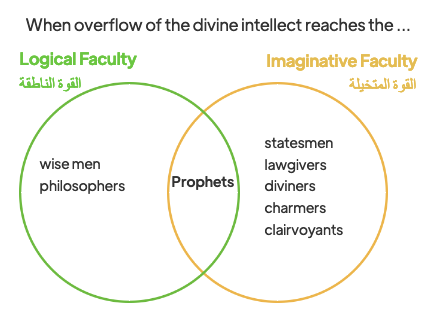
It is necessary to consider the nature of the divine influence, which enables us to think, and gives us the various degrees of intelligence. For this influence may reach a person only in a small measure, and in exactly the same proportion would then be his intellectual condition, whilst it may reach another person in such a measure that, in addition to his own perfection, he can be the means of perfection for others. The same relation may be observed throughout the whole Universe. There are some beings so perfect that they can govern other beings, but there are also beings that are only perfect in so far as they can govern themselves and cannot influence other beings. In some cases the influence of the [Active] Intellect reaches only the logical and not the imaginative faculty; either on account of the insufficiency of that influence, or on account of a defect in the constitution of the imaginative faculty, and the consequent inability of the latter to receive that influence: this is the condition of wise men or philosophers. If, however, the imaginative faculty is naturally in the most perfect condition, this influence may, as has been explained by us and by other philosophers, reach both his logical and his imaginative faculties: this is the case with prophets. But it happens sometimes that the influence only reaches the imaginative faculty on account of the insufficiency of the logical faculty, arising either from a natural defect, or from a neglect in training. This is the case with statesmen, lawgivers, diviners, charmers, and men that have true dreams, or do wonderful things by strange means and secret arts, though they are not wise men; all these belong to the third class. It is further necessary to understand that some persons belonging to the third class perceive scenes, dreams, and confused images, when awake, in the form of a prophetic vision. They then believe that they are prophets; they wonder that they perceive visions, and think that they have acquired wisdom without training. They fall into grave errors as regards important philosophical principles, and see a strange mixture of true and imaginary things. All this is the consequence of the strength of their imaginative faculty, and the weakness of their logical faculty, which has not developed, and has not passed from potentiality to actuality.
It is well known that the members of each class differ greatly from each other. Each of the first two classes is again subdivided, and contains two sections, namely, those who receive the influence only as far as is necessary for their own perfection, and those who receive it in so great a measure that it suffices for their own perfection and that of others. A member of the first class, the wise men, may have his mind influenced either only so far, that he is enabled to search, to understand, to know, and to discern, without attempting to be a teacher or an author, having neither the desire nor the capacity; but he may also be influenced to such a degree that he becomes a teacher and an author. The same is the case with the second class. A person may receive a prophecy enabling him to perfect himself but not others; but he may also receive such a prophecy as would compel him to address his fellow-men, teach them, and benefit them through his perfection. It is clear that, without this second degree of perfection, no books would have been written, nor would any prophets have persuaded others to know the truth. For a scholar does not write a book with the object to teach himself what he already knows. But the characteristic of the intellect is this: what the intellect of one receives is transmitted to another, and so on, till a person is reached that can only himself be perfected by such an influence, but is unable to communicate it to others, as has been explained in some chapters of this treatise (chap. xi.). It is further the nature of this element in man that he who possesses an additional degree of that influence is compelled to address his fellow-men, under all circumstances, whether he is listened to or not, even if he injures himself thereby. Thus we find prophets that did not leave off speaking to the people until they were slain; it is this divine influence that moves them, that does not allow them to rest in any way, though they might bring upon themselves great evils by their action. E.g., when Jeremiah was despised, like other teachers and scholars of his age, he could not, though he desired it, withhold his prophecy, or cease from reminding the people of the truths which they rejected. Comp. “For the Word of the Lord was unto me a reproach and a mocking all day, and I said, I will not mention it, nor will I again speak in His name; but it was in mine heart as a burning fire, enclosed in my bones, and I was wearied to keep it, and did not prevail” (Jer. xx. 8, 9). This is also the meaning of the words of another prophet, “The Lord God hath spoken, who shall not prophesy?” (Amos iii. 8) Note it.
Placeholder text
Nature is such, you should realize, that the divine emanation reaching us enables us to think, some better than others. For it may flow more fully to one person than an- other. To one it may suffice for his enlightenment alone. But elsewhere, it might spill over beyond what that person’s perfection requires and promote that of others. Some grow enlightened enough to govern; some, just enough to be governed, as I have shown (II – ).
If, for want of fullness in the flow or for lack of native imagination, this intellectual emanation reaches only the intellect, leaving the imagination untouched and without spillover from the mind, this is the plane of scholars. If the flow reaches both faculties, as I and some Philosophers have explained, and the native powers of the imagination are optimal, this is the prophetic level. If it reaches only the imagination, the intellect hin- dered by lack of talent or training, this is the plane of statesmen, lawgivers, soothsayers, seers, and dreamers of veridical dreams. Wonder workers, too, who use tricks to perform amazing feats, although unlearned, all belong to this third type. But truth be told, some in this class do imagine extraordinary things and have amazing dreams and trances even while waking, states not unlike prophetic visions. So they may think themselves prophets, astounded by their own imagination and presuming that they have learned something without study. They bring serious confusion to the gravest realms of thought, mingling truths with fantasies in a startling amalgam. All this is the work of imagination and a callow mind that has not advanced, an intellect unrealized.
In all three classes, we see wide differences in quality. In each of the first two, as I ex- plained, there are two types, since the emanation in either case might suffice to fulfill just one person or prove ample to be passed along and help others toward fulfillment. So in the first category, that of scholars, what flows to the mind might make one a seeker, dis- cerning, insightful, and understanding, but not moved to teach or write, finding in him- self neither the ability nor the inclination. Or it might do more, compelling one to write and teach. Likewise with the second class: A prophet might receive inspiration enough to perfect him alone. Or it might oblige him to appeal to the people, to teach them and share the perfection he receives.
Without this higher stage, you can see, the sciences would not be expounded in books, and prophets would not call people to see the Truth. For a scholar does not write to teach himself what he already knows. But the nature of Mind is ever to flow forth and spread from one recipient to another, until finally reaching one who can spread it no further but is just fulfilled by it himself, on the pattern suggested in another chapter of this work (II , .23ab).
In the nature of the case, one who reaches that higher measure of insight must speak out, whether or not folk are receptive, even if it brings him bodily harm. Some prophets, we know, exhort the people until slain. Divine emanation moves them. It will not let them be or give them any peace or rest, even in the face of dire extremities. So you find Jeremiah confessing that the contempt he met from sinful scoffers in his day made him long to hide his prophecy and cease to summon them to a Truth they spurned. But he could not: The Lord’s word hath brought me shame and daily derision. I might say that I will not mention Him or speak any longer in His name. But it hath become a fire blazing in my heart and locked in my bones. I exhaust myself restraining it. But I cannot (Jeremiah : – ). The same sense is voiced by another prophet: The Lord God hath spoken. Who will not prophesy? (Amos : ). Do understand this.
ינבגי אן תתנבה עלי טביעהֵ אלוג’וד פי הד’א אלפיץ’ אלאלאהי אלואצל אלינא אלד’י בה נעקל ותתפאצ’ל עקולנא וד’לך אנה קד יצל מנה שי לשכ’ץ מא פיכון מקדאר ד’לך אלשי אלואצל לה קדרא יכמלה לא גיר וקד יכון אלשי אלואצל אלי אלשכ’ץ קדרא יפיץ’ ען תכמילה לתכמיל גירה כמא ג’רי אלאמר פי אלמוג’ודאת כלהא אלתי מנהא מא חצל לה מן אלכמאל מא ידבר בה גירה ומנהא מא לם יחצל לה מן אלכמאל אלא קדר יכון מדברא בגירה כמא בינא.
ובעד הד’א פלתעלם אן הד’א אלפיץ’ אלעקלי אד’א כאן פאיצ’א עלי אלקוה אלנאטקה פקט ולא יפיץ’ מנה שי עלי אלקוה אלמתכ’ילה אמא לקלהֵ אלשי אלפאיץ’ או לנקץ כאן פי אלמתכ’ילה פי אצל אלג’בלה פלא ימכנהא קבול פיץ’ אלעקל פאן הד’א הו צנף אלעלמא אהל אלנט’ר. ואד’א כאן ד’לך אלפיץ’ עלי אלקותין ג’מיעא אעני אלנאטקה ואלמתכ’ילה כמא בינא ובין גירנא מן אלפלאספה וכאנת אלמתכ’ילה עלי גאיהֵ כמאלהא אלג’בלי פאן הד’א הו צנף אלאנביא. פאן כאן אלפיץ’ עלי אלמתכ’ילה פקט ויכון תקציר אלנאטקה אמא מן אצל אלג’בלה או לקלהֵ ארתיאץ’ פאן הד’א אלצנף הם אלמדברון ללמדן ואצ’עוא אלנואמיס ואלכהאן ואלזאג’רון וארבאב אלאחלאם אלצאדקה וכד’לך אלד’ין יעמלון אלעג’איב באלחיל אלגריבה ואלצנאיע אלכ’פיה מע כונהם גיר עלמא הם כלהם מן הד’א אלצנף אלת’אלת’.
וממא יג’ב אן תחקקה הו אן בעץ’ אהל הד’א אלצנף אלת’אלת’ תחדת’ להם כ’יאלאת עג’יבה ואחלאם ודהשאת פי אליקט’ה שבה מראה הנבואה חתי יט’נוא באנפסהם אנהם אנביא ויעג’בון ג’דא במא ידרכונה מן תלך אלכ’יאלאת ויט’נון אנהם קד חצלת להם עלום לא בתעלים ויאתון בתשוישאת עט’ימה פי אלאמור אלעט’ימה אלנט’ריה ותכ’תלט עליהם אלאמור אלחקיקיה באלאמור אלכ’יאליה אכ’תלאטא עג’יבא כל ד’לך לקוהֵ אלמתכ’ילה וצ’עף אלנאטקה וכונהא לא חאצל פיהא אצלא אעני אנהא לם תכ’רג’ ללפעל.
ומעלום אן פי כל צנף מן הד’ה אלת’לת’ה אצנאף תפאצ’לא כת’ירא ג’דא וכל צנף מן אלצנפין אלאולין ינקסם קסמין כמא בינא וד’לך אן אלפיץ’ אלואצל לכל צנף מנהמא יכון אמא בקדר יכמלה לא גיר או בקדר יפצ’ל עז כמאלה מא יכמל בה גירה. פאלצנף אלאול והם אלעלמא קד יכון אלפאיץ’ עלי קוהֵ אלשכ’ץ אלנאטקה מנהם קדרא יג’עלה ד’א טלב ופהם ויערף ויתמיז ולא יתחרך לתעלים גירה ולא ללתאליף ולא יג’ד לד’לך שוקא ולא לה עליה קדרה. וקד יכון אלפאיץ’ עליה קדרא יחרכה צ’רורה ליולף ויעלם. כד’לך אלחאל פי אלצנף אלת’אני קד יאתיה מן אלוחי מא יכמל ד’לך אלנבי לא גיר וקד יאתיה מנה מא יוג’ב לה אן ידעו אלנאס ויעלמהם ויפיץ’ עליהם מן כמאלה.
פקד תבין לך אן לולא הד’א אלכמאל אלאזיד למא אלפת אלעלום פי אלכתב ולא דעוא אלאנביא אלנאס אלי עלם אלחק לאן לא יולף עאלם שיא לנפסה ליעלם נפסה מא קד עלם בל טביעהֵ הד’א אלעקל הכד’א הי אנהא תפיץ’ אבדא ותמתד מן קאבל ד’לך אלפיץ’ לקאבל אכ’ר בעדה חתי תנתהי אלי שכ’ץ לא ימכן אן יתעדאה ד’לך אלפיץ’ בל יכמלה פקט כמא מת’לנא פי בעץ’ פצול הד’ה אלמקאלה.
וטביעהֵ הד’א אלאמר תוג’ב למן וצל לה הד’א אלקדר אלזאיד מן אלפיץ’ אן ידעו אלנאס ולא בד קבל מנה או לם יקבל ולו אד’י פי ג’סמה חתי אנא וג’דנא אנביא דעוא אלנאס אלי אן קתלוא וד’לך אלפיץ’ אלאלאהי יחרכהם ולא יתרכהם יקרוא ולא יסכנוא בוג’ה ולו לקוא אלשדאיד ולד’לך תג’ד ירמיה עליה אלסלאם צרח אנה למא לחקה מן אהאנהֵ אולאיך אלעצאה ואלכאפרין אלד’ין כאנוא פי זמאנה ראם אן יכתם נבותה ולא ידעוהם אלי אלחק אלד’י רפצ’וה פלם יסתטע עלי ד’לך קאל כי היה דבר י”י לי לחרפה ולקלס כל היום ואמרתי לא אזכרנו ולא אדבר עוד בשמו והיה בלבי כאש בערת עצור בעצמותי ונלאתי כלכל ולא אוכל. והד’א הו מעני קול אלנבי אלאכ’ר אדני אלהים דבר מי לא ינבא. פאעלם הד’א:
Placeholder text
צריך שתתעורר על טבע המציאות בזה השפע האלהי המגיע אלינו אשר בו נשכיל ויהיה יתרון שכלינו זה על זה – והוא שאפשר שיגיע ממנו מעט לאיש אחד, ויהיה שיעור הדבר ההוא המגיע לו שיעור שישלימהו לא זולת זה; ואפשר שיהיה הדבר המגיע אל האיש שיעור שישפע משלמותו להשלים זולתו. כמו שקרה הענין בנמצאות כולם, אשר מהם – שהגיע לו מן השלמות מה שינהיג בו זולתו, ומהם – שלא יגיע לו מן השלמות אלא כשיעור שיהיה מנהיג בו עצמו ולא זולתו כמו שבארנו.
ואחר זה תדע, שזה השפע השכלי כשיהיה שופע על הכח הדברי לבד, ולא ישפע דבר ממנו על הכח המדמה, אם למיעוט הדבר השופע או לחסרון היה במדמה בעיקר הבריאה ולא יוכל לקבל שפע השכל – שזה הוא כת החכמים בעלי העיון. וכשיהיה השפע ההוא על שני הכוחות יחד – רצוני לומר: הדברי והמדמה כמו שבארנו ובאר זולתנו מן הפילוסופים – והיה המדמה על תכלית שלמות ביצירה – זהו כת הנביאים. ואם יהיה השפע על המדמה לבד ויהיה קיצור הדברי עם מעיקר היצירה או למיעוט התלמדות – זאת הכת הם מנהיגי המדינות, מניחי הנימוסים, והקוסמים, והמנחשים, ובעלי החלומות הצודקות; וכן העושים הפליאות בתחבולות הזרות והמלאכות הנעלמות – עם היותם בלתי חכמים – הם כולם מזאת הכת השלישית.
וממה שצריך שיתאמת אצלך הוא – שקצת אנשי זאת הכת השלישית יתחדשו להם דמיונות נפלאים וחלומות וטרופים בעת היקיצה בדמות ׳מראה נבואה׳ עד שיחשבו בעצמם שהם נביאים, ויפלאו מאד במה שישיגוהו מהדמיונות ההם ויחשבו שכבר הגיעו להם חכמות לא בלימוד, ויבואו בבלבולים גדולים בענינים העצומים העיוניים, ויתערבו להם הענינים האמיתיים בענינים הדמיוניים ערוב נפלא – כל זה לחוזק הכח המדמה וחולשת הדברי מפני שלא עלה בידו דבר – רצוני לומר: שלא יצא לפועל.
וידוע שבכל כת משלש הכיתות האלה יתרון רב מאד; וכל כת משתי הכתות הראשונות תחלק לשני חלקים כמו שבארנו – וזה שהשפע המגיע לכל כת משתיהם יהיה, אם בשיעור שישלימהו לא זולת זה או בשיעור שיעדף משלמותו מה שישלים בו זולתו. והכת הראשונה – והם החכמים – אפשר שיהיה השופע על כח האיש מהם הדברי כשיעור שישימהו בעל חקירה והבנה וידע ויכיר, ולא יתנועע ללמד לזולתו ולא לחבר, ולא ימצא לזה תשוקה ואין לו עליו יכולת; ואפשר שיהיה השופע עליו כשיעור שיניעהו בהכרח לחבר וללמד. כן הענין בכת השנית אפשר שיבואהו מן הנבואה מה שישלים הנביא לא זולת זה; ואפשר שיבואהו ממנה מה שחיב לו שיקרא האנשים וילמדם וישפיע עליהם משלמותו.
הנה כבר התבאר לך כי לולא זה השלמות הנוסף, לא היו החכמות מחוברות בספרים, ולא היו הנביאים מפיסים בני אדם לדעת האמת – כי לא יחבר חכם דבר לעצמו ללמד עצמו מה שכבר ידע; אבל טבע זה השכל כן הוא שישפיע לעולם, וימשך ממקבל זה השפע למקבל אחר אחריו, עד שיגיע אל איש אי אפשר שיעברהו השפע ההוא אבל ישלימהו לבד – כמו שבארנו בקצת פרקי זה המאמר.
וטבע זה הענין מחייב למי שהגיע לו זה השיעור הנוסף מן השפע – שיקרא בני אדם על כל פנים יקובל ממנו או לא יקובל ואפילו יזיק בעצמו. עד שאנחנו נמצא נביאים קראו בני אדם עד שנהרגו והשפע ההוא האלהי יניעם ולא יניחם לשקוט ולא לנוח בשום פנים ואפילו הגיעו לרעות גדולות. ולזה תמצא ירמיה – עליו השלום כי כשהגעהו מבזיון המורים והכופרים ההם אשר היו בזמנו, השתדל לסתום נבואתו ולא לקראם אל האמת אשר מאסוהו, ולא היה יכול לסבול זה – ואמר: ״כי היה דבר יי לי לחרפה ולקלס כל היום; ואמרתי לא אזכרה ולא אדבר עוד בשמו – והיה בלבי כאש בוערת עָצֻר בעצמותי ונלאיתי כלכל ולא אוכל״. וזה ענין מאמר הנביא האחר: ״אדוני יי דיבר – מי לא ינבא״. ודע זה!
Il est nécessaire d’appeler ton attention sur la nature de l’être de cette émanation divine(3)Par le mot פיץׄ, épanchement, émanation, l’auteur entend ici l’influence que l’intellect actif exerce sur les facultés de l’homme. qui nous arrive, par laquelle nous pensons et (par laquelle) nos intelligences sont supérieures les unes aux autres. C’est que tantôt elle arrive à un individu dans une mesure suffisante pour le perfectionner lui-même, sans aller au delà(4)Littéralement: C’est qu’il en arrive parfois quelque chose à un individu, de manière que la mesure de ce quelque chose qui lui arrive est assez pour le perfectionner, pas autre chose., tantôt ce qui en arrive à l’individu suffit au delà de son propre perfectionnement(1)Au lieu de שלימותו, qu’ont la plupart des éditions de la version d’Ibn-Tibbon, il faut lire השלמתו, comme l’ont les mss. et l’édition princeps. La version d’Al-’Harîzi est ici plus claire; elle porte: שיעור יותר ממה שיהיה שלם ויוכל להשלים בו לזולתו., (de sorte qu’il lui en reste) pour le perfectionnement des autres. Il en est de même pour tous les êtres: il y en a qui ont assez de perfection pour gouverner les autres (êtres), tandis qu’il y en a d’autres qui n’ont de perfection qu’autant qu’il faut pour se laisser gouverner par d’autres(2)Nous avons suivi la leçon qu’offrent la plupart des mss., qui portent: קדר יכון מדבר בגירה. La vers. d’Ibn-Tibbon porte: כשיעור שיהיה מנהיג בו עצמו לא זולתו; de même, Al-’Harîzi: כפי מה שינהיג בו לנפשו לא לזולתו, qu’autant qu’il faut pour se gouverner soi-même, et non les autres. Les deux traducteurs ont lu: קדר יכון מדברא בה נפםה לא גירה, leçon qu’on trouve en effet dans les deux mss. de Leyde, et qui est plus conforme à la manière dont l’auteur s’exprime plus haut, ch. XI (p. 95-96). D’après la leçon que nous avons adoptée, le sens est: tandis qu’il y a d’autres êtres dont toute la perfection consiste à être constitués de manière à recevoir l’influence et la direction des êtres qui leur sont supérieurs. Il s’agit ici des êtres inférieurs régis par les êtres supérieurs, dont les forces se communiquent à eux. Voy. ci-dessus, ch. X et XI, et la Ire partie de cet ouvrage, ch. LXXII (t. 1, p. 361)., comme nous l’avons exposé.
Cela étant, il faut que tu saches que, si cette émanation de l’intellect (actif) se répand seulement sur la faculté rationnelle (de l’homme), sans qu’il s’en répande rien sur la faculté imaginative [soit parce que l’émanation elle-même est insuffisante(3)Littéralement: à cause du peu (paucitatis) de la chose qui s’épanche; c’est-à-dire, parce que l’intellect actif ne s’épanche pas suffisamment. Il va sans dire que cette insuffisance ne saurait être attribuée à l’intellect actif lui-même, qui est toujours en acte et qui agit toujours avec la même force; mais la matière sur laquelle il agit (ou l’intellect hylique de l’homme) peut quelquefois ne pas être apte à recevoir la forme, de sorte que l’action de l’intellect actif, qui donne la forme, se trouve arrêtée ou affaiblie en apparence (voy. ci-dessus, p. 139, et le t. I, p. 311, note 4). Selon Schem-Tob et Abravanel, il faut entendre par la chose qui s’épanche la faculté rationnelle, qui répand sur la faculté imaginative ce qu’elle a reçu de l’intellect actif et qui, selon qu’elle est plus ou moins forte, agit plus ou moins sur la faculté imaginative. Abravanel, qui ne pouvait lire que la version d’Ibn-Tibbon, croit devoir rapporter le mot ממנו (dans ולא ישפע דבר ממנו) à la faculté rationnelle; mais le texte arabe qui a מנה, au masculin, n’admet pas cette explication., soit parce que la faculté imaginative est défectueuse dans sa formation primitive, de sorte qu’elle est incapable de recevoir l’émanation de l’intellect], c’est là (ce qui constitue) la classe des savants qui se livrent à la spéculation. Mais, si cette émanation se répand à la fois sur les deux facultés, je veux dire sur la rationnelle et sur l’imaginative comme nous l’avons exposé et comme l’ont aussi exposé d’autres parmi les philosophesDans le ms. de Leyde, n° 18, on a omis les mots , et les deux traducteurs hébreux les ont également passés. L’auteur veut parler de ce que, dans le chapitre précédent, il a dit de la faculté imaginative et de l’émanation divine se répandant d’abord sur la faculté rationnelle et ensuite sur la faculté imaginative., et que l’imaginative a été créée primitivement dans toute sa perfection, c’est là (ce qui constitue) la classe des prophètes. Si, enfin, l’émanation se répand seulement sur la faculté imaginative, et que la faculté rationnelle reste en arrière, soit par suite de sa formation primitive, soit par suite du peu d’exercice, c’est (ce qui constitue) la classe des hommes d’État qui font les lois(2)Quelques mss. ont וואצׄעוא, avec le ו copulatif; d’après cette leçon il faudrait traduire: C’est la classe des hommes d’État, des législateurs, etc., des devins, des augures et de ceux qui font des songes vrais; et de même, ceux qui font des miracles par des artifices extraordinaires et des arts occultes, sans pourtant être des savants, sont tous de cette troisième classe.
Ce dont il faut te pénétrer, c’est qu’à certains hommes de cette troisième classe, il arrive, même quand ils sont éveillés, d’étonnantes visions chimériques, des rêves et des agitations, semblables aux visions prophétiques, de telle sorte qu’ils se croient eux-mêmes prophètes; ils se complaisent donc beaucoup dans ce qu’ils perçoivent de ces visions chimériques, croyant qu’ils ont acquis des sciences sans avoir fait des études, et ils apportent de grandes confusions dans les choses graves et spéculatives, mêlant ensemble, d’une manière étonnante, les choses vraies et les chimères. Tout cela, parce que la faculté imaginative est forte (chez eux), tandis que la faculté rationnelle est faible et n’a absolument rien obtenu; je veux dire qu’elle n’a point passé à l’acte.
On sait que, dans chacune de ces trois classes, il y a un grand nombre de gradations(1)Littéralement: beaucoup de supériorité réciproque; c’est-à-dire, que les individus appartenant à chacune de ces catégories diffèrent beaucoup entre eux par la supériorité qu’ils ont les uns sur les autres. La version d’Ibn-Tibbon, qui porte יתרון רב מאד, manque de clarté; le sens est: יש יתרון רב מאד לבני אדם זה על זה. Au commencement de ce chapitre, les mots ותתפאצׄל עקולנא ont été plus exactement rendus par: ויהיה יתרון שכלינו זה על זה. Al-’Harîzi traduit: וידוע כי כל מין משלשת המינים האלה יש יתרון גדול לזה על זה; d’après cette traduction, ce seraient les trois catégories elles-mêmes qui seraient déclarées avoir une supériorité les unes sur les autres, ce qui est un contre-sens.. Chacune des deux premières classes se divise en deux parties, comme nous l’avons exposé. En effet, l’émanation qui arrive à chacune des deux classes est, ou bien suffisante seulement pour perfectionner l’individu, et pas plus, ou bien elle est assez forte pour qu’il en reste à cet individu de quoi en perfectionner d’autres(2)Littéralement: ou bien, en quantité (suffisante) pour le perfectionner (c’est-à-dire, l’individu auquel elle arrive), pas autre chose, ou bien, en telle quantité qu’il en reste (à l’individu), après son perfectionnement, de quoi perfectionner d’autres.. En ce qui concerne la première classe, celle des savants, tantôt ce qui se répand sur la faculté rationnelle(3)Les éditions de la version d’Ibn-Tibbon ont השכלי, il faut lire הדברי, comme l’ont les mss. de l’individu est suffisant pour en faire un homme d’étude et d’intelligence, possédant des connaissances et du discernement, mais qui ne se sent pas porté à instruire les autres, ni à composer des ouvrages, n’ayant pour cela ni le goût ni la capacité (nécessaire); tantôt, ce qui se répand sur lui est d’une force suffisante pour le stimuler nécessairement à composer des ouvrages et à professer. Il en est de même de la deuxième classe: tantôt tel prophète a des inspirations qui servent seulement à le perfectionner lui-même; tantôt il est inspiré de manière à être forcé de faire un appel aux hommes, de les instruire et de répandre sur eux (une partie) de sa perfection.
Il est donc clair que, sans cette perfection surabondante, on n’aurait pas composé de livres sur les sciences, et les prophètes n’auraient pas appelé les hommes à la connaissance de la vérité. En effet, un savant n’écrit rien pour lui-même, afin de s’enseigner à lui-même ce qu’il sait déjà; mais il est dans la nature de cet intellect (actif)(1)Ibn-Tibbon n’a pas exprimé le pronom démonstratif הדׄא; la version d’Al-’Harîzi porte זה השכל. de se communiquer perpétuellement et d’étendre successivement son épanchement d’un individu à un autre(2)Littéralement: et de s’étendre de celui qui reçoit cet épanchement à un autre qui le reçoit après lui. Les verbes et תנתהי sont au féminin, ayant pour sujet טביעה̈, la nature., jusqu’à ce qu’il arrive à un individu au delà duquel son influence ne saurait se répandre(3)Littéralement: à un individu que cet épanchement ne peut pas dépasser. et qu’il ne fait que perfectionner (personnellement), comme nous l’avons expliqué, par une comparaison, dans un des chapitres de ce traité(4)Voy. ci-dessus, ch. XI (p. 96), l’exemple de l’homme riche. La version d’Ibn-Tibbon porte simplement כמו שביארנו; mais le verbe arabe מתׄל signifie faire une comparaison..
La nature de cette chose fait que celui qui a reçu cet épanchement surabondant prêche nécessairement aux hommes, n’importe qu’il soit écouté ou non, dût-il même exposer sa personne(5)Littéralement: dût-il être endommagé dans son corps. La version d’Ibn-Tibbon a בעצמו, pour כגופו.; de sorte que nous trouvons des prophètes qui prêchèrent aux hommes jusqu’à se faire tuer, stimulés par cette inspiration divine qui ne leur laissait ni tranquill té ni repos(1)Tous les mss. ont et יםכנוא au mode subjonctif; il faut sous-entendre la conjonction . Voy. Silv. de Sacy, grammaire arabe, (2e édition), t. II, n° 64., lors même qu’ils étaient frappés de grands malheurs. C’est pourquoi tu vois Jérémie déclarer(2)Les deux traducteurs hébreux ont omis de traduire le verbe , qui manque aussi dans le ms. de Leyde, n° 18., qu’à cause du mépris qu’il essuyait de la part de ces hommes rebelles et incrédules qui existaient de son temps, il voulait cacher(3)Ibn-Tibbon, qui a לםתום, paraît avoir lu יכׄתם , avec un כׄ ponctué; d’après lui, il faudrait traduire: il voulait clore sa mission prophétique. sa mission prophétique et ne plus les appeler à la vérité qu’ils avaient rejetée, mais que cela lui était impossible: Car la parole de l’Éternel, dit-il, est devenue pour moi une cause d’opprobre et de dérision tout le jour. Je me disais: Je ne ferai plus mention de lui, et je ne parlerai plus en son nom; mais il y avait dans mon cœur comme un feu ardent, renfermé dans mes os; j’étais las de le supporter, je ne le pouvais plus (Jérémie, 20, 8, 9). C’est dans le même sens qu’un autre prophète a dit: Le Seigneur, l’Éternel, a parlé; qui ne prophétiserait pas (Amos, 3, 8)? — Il faut te pénétrer de cela.
Summary
The divine intellect, through whose influence we all get the ability to think, “overflows” more in some people than in others. When it does so, it may either overflow into only the logical faculty, or into only the imaginative faculty, or both. The schema set up by Maimonides looks like this: